

The CAMCEAD group at the University of Cambridge develops and operates the computational infrastructure supporting the MOONS Guaranteed Time Observations surveys at the VLT. We coordinate the operational data repository, backend processing services, Level 1 and Level 2 pipelines, operational databases, and Kubernetes-based services that move observations from raw frames to science-ready products.
CAMCEAD · Institute of Astronomy · University of Cambridge
0.64–1.8 µm optical to near-IR coverage
LRS + HRS: R~4000 and R~19000
IRIS National Facility infrastructure
What CAMCEAD delivers for MOONS
CAMCEAD coordinates and operates the production data-flow infrastructure while developing core backend components in collaboration with the international MOONROCCS team.
Operational Repository & Infrastructure
Operational Repository, database and Kubernetes environment forming the backbone of all MOONS data operations.
Backend & L1 Processing
Backend data processing services and L1 pipeline wrapper development for night-time reduction.
L2 Pipelines & Jupyter Services
L2 redshift pipeline, Galactic and Extragalactic science processing, and Jupyter notebook services for science teams.
The nightly data flow
CAMCEAD operates the integrated path from VLT observations to validated, queryable science products.
MOONROCCS collaboration
Cambridge coordinates the MOONROCCS Data Flow team, integrating contributions from partner institutes into a unified operational environment for MOONS GTO surveys.
- Cambridge: coordination, OR, DB, backend, L1/L2 services
- USACH: Galactic L2 pipeline
- St Andrews: L2 spectral fitting
- Edinburgh: archive services
- INAF IASF-Milano: validation, monitoring and simulations
- Observatoire de Paris: DRS, calibration and arm splicing
Software components
- moonsdr_wrap — Python orchestration layer for MOONS night reduction
- moons_backends — backend post-DRS processing modules
- rmwrap_moons — Redmonster wrapper for redshift fitting and classification
About MOONS
MOONS is the Multi-Object Optical and Near-infrared Spectrograph for ESO's Very Large Telescope at Paranal. It uses around 1000 fibres feeding two cryogenic spectrographs to obtain optical and near-infrared spectra for large Galactic and extragalactic surveys.
Contact: casuhelp@ast.cam.ac.uk
Related Links
CamCEAD Collaborators

Research Associate
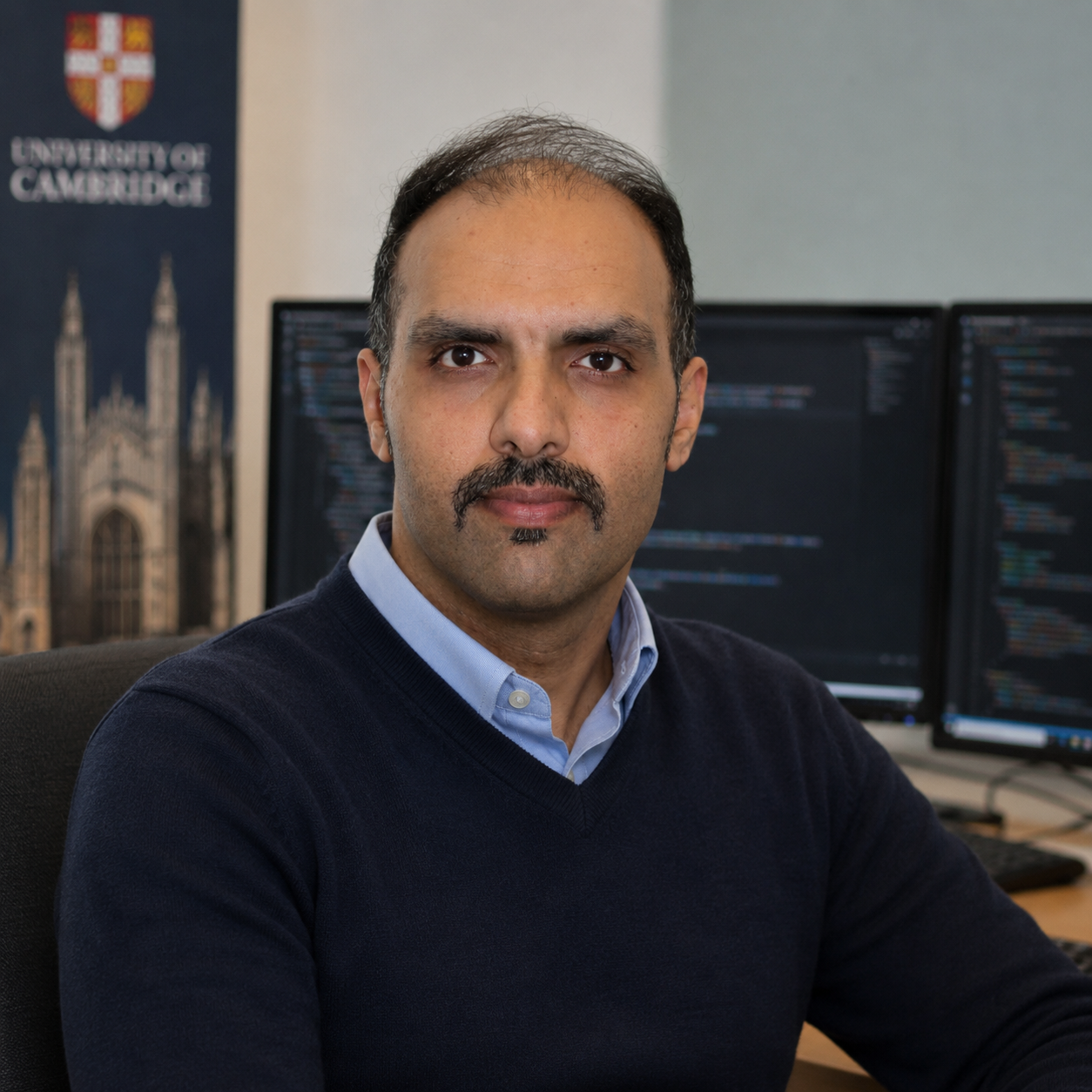
Assistant Research Professor